
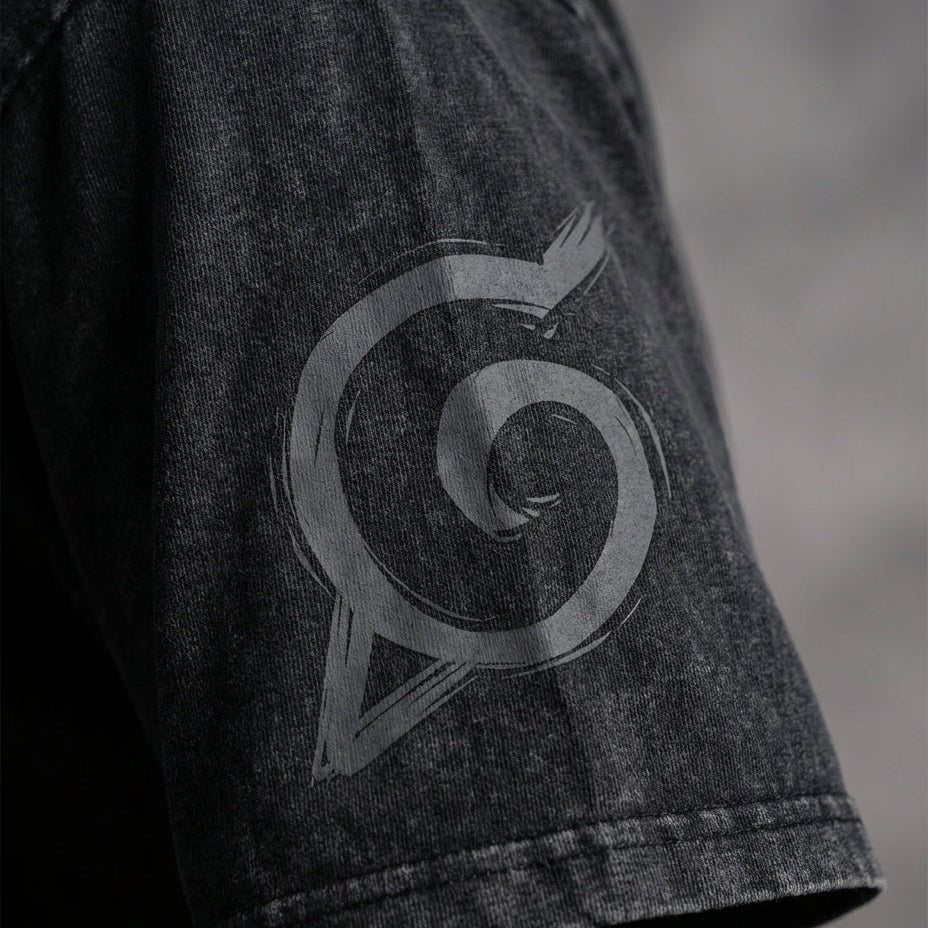
Why Are Heavyweight Cotton Anime Shirts Better?
Why Are Heavyweight Cotton Anime Shirts Better? The Complete GSM Guide
The short answer: heavyweight cotton anime shirts are better because thicker, denser fabric survives more wash cycles, holds its shape instead of twisting and sagging, drapes the way streetwear is supposed to drape, and gives the printed artwork a stable surface that resists cracking. A 230 to 250 GSM shirt is not just "more shirt": it is a structurally different garment from the 150 GSM promo tee most anime merch is printed on. This guide explains the fabric science in plain language, so you can judge any shirt yourself, ours included.
One thing before we start: heavier is not automatically better for everyone, and any guide that tells you otherwise is selling, not educating. There are real tradeoffs, and we will cover them honestly.
In this guide
- What does GSM mean?
- 180 vs 200 vs 230 vs 250 GSM
- Why heavyweight cotton lasts longer
- Why thicker cotton keeps its shape
- How premium cotton affects comfort
- Why prints survive longer on quality fabric
- Cheap blanks vs premium blanks
- Myths and misconceptions
- Washing recommendations
- Who should (and should not) buy heavyweight
- FAQ
What does GSM mean on a t-shirt?
GSM stands for grams per square meter: the weight of one square meter of the fabric. It is the textile industry's standard measure of fabric density, and it is the single most useful number for judging a t-shirt before you touch it.
Picture cutting a one meter by one meter square out of a shirt and putting it on a kitchen scale. A thin promotional tee's square weighs around 140 to 150 grams. A heavyweight streetwear tee's square weighs 230 to 250 grams, roughly two thirds more material in the same area. That extra mass comes from thicker yarns and a denser knit, and it changes almost everything about how the garment behaves: how it drapes, how it survives washing, how opaque it is, and how well it carries a print.
Two caveats that most guides skip. First, GSM measures weight, not quality; a heavy fabric made from short, rough fibers can still feel bad and pill quickly, which is why yarn type matters too (more on ring-spun and combed cotton below). Second, brands measure GSM before or after washing, and garment-washed fabrics shrink slightly and get denser, so small differences between quoted numbers, 220 versus 230 for instance, are not worth losing sleep over. Big differences, 150 versus 250, absolutely are.
What is the difference between 180, 200, 230 and 250 GSM?
In one line: 180 GSM is an everyday basic, 200 GSM is a solid midweight, 230 GSM is where "heavyweight" honestly begins, and 250 GSM is full streetwear territory with maximum structure. Here is the whole spectrum, including the weights below 180 where most cheap anime merch actually lives:
| GSM | Class | Feels like | Typically found in |
|---|---|---|---|
| 130–160 | Lightweight | Thin, often see-through in white | Promo tees, event giveaways, budget print-on-demand merch |
| 180 | Light-mid | Soft, airy, minimal structure | Everyday basics, hot-climate tees, undershirts |
| 200–210 | Midweight | Substantial but breathable | Quality retail tees, regular-fit premium cuts |
| 230 | Heavyweight | Dense, structured, opaque | Streetwear brands, garment-washed vintage tees |
| 250+ | Max heavyweight | Boxy, stiff at first, breaks in over time | Premium streetwear, luxury blanks, boxy oversized cuts |
A few practical translations. A 180 GSM shirt folds like paper and stuffs into a gym bag; a 250 GSM shirt folds like a light sweater. In white, 150 GSM shows your skin tone through the fabric; 230 GSM does not. On the hanger, a lightweight tee looks flat; a heavyweight tee holds a silhouette. None of these make one weight morally superior, they make them different tools, which is exactly why the "who should buy what" section exists at the end of this guide.
Why does heavyweight cotton last longer?
Because durability in a knit fabric is mostly a function of yarn thickness, knit density, and dimensional stability, and heavyweight cotton wins on all three. Every wash cycle is a small mechanical assault: agitation, friction against other garments, heat, and detergent. What decides whether a shirt survives two years or two months is how much material stands between that assault and failure.
Concretely, four mechanisms are at work:
1. Abrasion resistance. Thicker yarns simply have more fiber to lose before they thin out and tear. The elbows, shoulders, and hem of a 150 GSM tee wear through where a 240 GSM tee barely shows use.
2. Seam stress distribution. Stitches anchor better in dense fabric. Lightweight knits let seams pull, pucker, and eventually give at the shoulders and collar, the two places a t-shirt carries all its load.
3. Pilling behavior. Pilling happens when loose fiber ends ball up on the surface. Tightly knit, longer-staple cotton has fewer loose ends to begin with. This is where yarn quality compounds with weight: a heavyweight shirt made from combed, ring-spun cotton pills dramatically less than a cheap open-end knit of any weight.
4. Shrink stability. Quality heavyweight tees are usually garment-washed or pre-shrunk, meaning the fabric has already done most of its contracting before you ever wear it. Cheap tees skip this step to save cost, which is why the shirt that fit at the store is a crop top after the third wash.
The honest counterpoint: a heavyweight shirt abused in hot washes and tumble dryers will still degrade, just slower. Fabric weight buys you a bigger margin for error, not immortality.
Why does thicker cotton keep its shape?
Because structure comes from fabric weight: a denser knit resists stretching, twisting, and collar sag in a way thin jersey physically cannot. This matters twice as much for anime streetwear, where the whole look depends on a boxy, intentional silhouette.
Three shape failures kill cheap tees, and weight addresses each:
Collar sag. The ribbed collar of a lightweight tee has little recovery force; after a season of being pulled over heads, it waves like bacon. Heavyweight collars, usually cut thicker to match the body fabric, snap back.
Torquing. That spiral twist where the side seams migrate to the front of the shirt after washing. It comes from tension imbalances in loosely knit fabric relaxing unevenly. Denser knits, especially pre-washed ones, have already released that tension.
Hem stretch and drape collapse. An oversized anime tee is supposed to fall in a clean line from the shoulder. Thin fabric clings, bunches, and telegraphs everything under it; 230+ GSM fabric has enough self-weight to hang straight. This is the physical reason oversized cuts are almost always made heavyweight: the fit does not work in thin jersey.
Practical example: take a light promo tee and a heavyweight vintage tee, hold each up by the shoulders, and let go onto a table. The light one lands as a shapeless puddle; the heavy one folds into layers. That difference is exactly what your torso experiences all day.
How does premium cotton affect comfort?
Comfort comes from fiber quality and finishing more than from weight itself: combed, ring-spun cotton feels smooth at any GSM, and garment washing gives heavyweight fabric a broken-in softness from day one. This is the most misunderstood part of the whole topic, so it is worth slowing down.
Three terms do the heavy lifting:
Ring-spun cotton is yarn made by continuously twisting and thinning fibers, producing a smoother, stronger thread than the cheaper open-end method. Nearly all shirts that feel "premium" are ring-spun.
Combed cotton has been brushed to remove short fibers and debris before spinning, leaving only longer fibers. Fewer short fiber ends means less itch and less pilling.
Garment washing (including enzyme and acid washes) tumbles the finished shirt to pre-shrink it and soften the hand. It is why a good vintage-style heavyweight tee feels like your favorite five-year-old shirt on the first wear, while an unwashed heavyweight blank starts out stiff, almost cardboard-like, and needs several washes to relax.
Now the tradeoff, stated plainly: heavyweight fabric is warmer. At 35°C in direct sun, a 250 GSM shirt is objectively hotter than a 150 GSM one; more mass holds more heat. Breathability partially compensates, since 100% cotton wicks and breathes regardless of weight, and a boxy oversized cut lets air move under the fabric in a way a clinging thin tee does not. But if your climate is brutal and your priority is maximum cooling, a quality midweight is the smarter buy, and pretending otherwise would be dishonest. That is why our own catalog runs both: garment-washed heavyweight vintage tees for structure, and lighter simple-cotton cuts for the hottest days.
Why do prints survive longer on quality fabric?
Because a print is only as stable as the surface it sits on: dense, smooth, dimensionally stable fabric gives ink a foundation that does not stretch, shrink, or roughen underneath it. Fans usually blame the ink when a design cracks; more often the fabric failed first.
The mechanics are simple. Screen-printed and heat-applied graphics form a thin layer bonded to the knit surface. Every time the fabric under that layer stretches or shrinks, the ink layer has to move with it. Lightweight jersey stretches a lot, in every direction, on every wear and wash; the ink layer flexes thousands of times more than it would on a stable base, and eventually it cracks along stress lines, usually across the chest where the fabric flexes most. Add cheap-blank shrinkage, and the print puckers as the substrate contracts underneath it.
Surface texture matters too. Combed ring-spun fabric is smooth, so ink sits evenly and bonds consistently. Rough open-end knits have an uneven surface where ink coverage varies, and the high points abrade first in the wash, producing that faded, cracked look after a handful of cycles.
Honest caveat: print method and curing quality matter as much as the blank. A badly cured print will fail on the best fabric in the world, and a properly done print on a midweight shirt can last years with care. Fabric is the foundation, not the whole house. Which brings us to the wash section further down, because user behavior is the third variable, and it is the one you control completely.
What separates cheap blanks from premium blanks?
A "blank" is the unprinted shirt a design gets printed on, and it is where most anime merch quietly cuts costs. Two shirts with the same artwork can have wildly different lifespans purely because of the blank underneath. Here is the full comparison:
| Property | Cheap blank | Premium blank |
|---|---|---|
| Weight | 130–160 GSM | 200–250+ GSM |
| Yarn | Open-end, carded | Ring-spun, often combed |
| Pre-shrunk | Rarely; shrinks 5–10% | Garment-washed or pre-shrunk |
| Collar | Thin rib, sags in months | Substantial rib, holds shape |
| Opacity | Semi-sheer in light colors | Fully opaque |
| Hand feel over time | Rough, pills, goes limp | Softens and improves with washes |
| Realistic lifespan | One season of regular wear | Years of regular wear |
Why does so much anime merch use cheap blanks? Economics. Mass print-on-demand platforms optimize for the lowest possible base cost, because their sellers compete on price and never touch the physical product. The blank is invisible in a product photo, so it is the first corner cut. This is also the honest reason a premium anime shirt costs more: you are not paying extra for the same shirt, you are paying for roughly 60% more cotton, better yarn, and a finishing process the cheap shirt skipped entirely.
How to spot the difference before buying, in three checks: look for a stated GSM or fabric weight (sellers with good fabric usually say so; silence is a signal), look for "ring-spun", "combed", or "garment-washed" in the description, and check whether light colorways are photographed on a body, since sheer fabric is hard to hide on a model.
What are the biggest myths about heavyweight shirts?
Five misconceptions come up constantly, and two of them contain a grain of truth worth acknowledging.
Myth 1: "Higher GSM always means higher quality." False. GSM measures weight, not fiber quality or construction. A 250 GSM shirt made from rough carded cotton with bad seams is a heavy bad shirt. Weight plus good yarn plus good finishing is the actual formula.
Myth 2: "Heavyweight shirts are stiff and uncomfortable." Half true, and it depends on finishing. An unwashed heavyweight blank genuinely is stiff at first. Garment-washed heavyweight fabric arrives already broken in, which is precisely why the vintage-wash process exists.
Myth 3: "You cannot wear heavyweight in summer." Mostly false. A boxy heavyweight tee in a light colorway is comfortable in most summer conditions because the loose fit ventilates. In extreme heat, though, midweight genuinely is cooler; see the tradeoffs above.
Myth 4: "100% cotton always shrinks a full size." False for pre-shrunk and garment-washed shirts, which have already contracted. True enough for cheap unwashed blanks, which is where the myth comes from.
Myth 5: "The print is what you pay for, the shirt is just a shirt." The most expensive misconception in anime merch. The identical design printed on a 140 GSM promo blank and a 240 GSM combed blank produces two products with completely different lifespans, drape, and feel. The shirt is most of what you pay for, and it should be.
How should you wash a heavyweight printed shirt?
Cold, inside-out, hang dry. Those three habits roughly double the life of any printed shirt, heavyweight or not. The full routine:
1. Turn it inside out. The print faces inward, protected from friction against other garments and the drum.
2. Wash cold, 30°C or below. Heat is the main enemy of both print adhesion and dimensional stability.
3. Gentle cycle, moderate load. Less agitation, less abrasion.
4. Skip the tumble dryer. Hang dry or lay flat. Dryer heat is responsible for more cracked prints and shrunken shirts than every other cause combined. Heavyweight cotton takes longer to air-dry than thin fabric; that is a genuine minor inconvenience, plan for it.
5. Never iron the print directly. Iron inside out on low, or steam.
6. Wash less often. Heavyweight cotton does not cling to the body the way thin jersey does and stays fresh longer between washes. Fewer cycles is the single cheapest durability upgrade there is.
Who should buy heavyweight anime shirts, and who should not?
Buy heavyweight if you want structure, longevity, and the streetwear silhouette. Skip it if you live in extreme heat, prefer featherlight clothing, or genuinely only need a shirt for one convention weekend. Walk the tree:
If most of your answers pointed at heavyweight, this is where we stop being neutral and mention our own work, briefly and with context. Everything above is exactly the philosophy Yeager Apparel's vintage tees are built on: garment-washed heavyweight cotton with the broken-in feel from the first wear, relaxed cuts made for the oversized silhouette, and original anime artwork treated as the reason to build a good shirt rather than an excuse to sell a bad one. Our regular-fit line runs a 210 GSM pure cotton and our hoodies go up to a 420 GSM fleece, because the same fabric logic applies up the weight scale. Judge them by the checklist in this guide; that is what it is for. And if you are between sizes, the answer is in our fit guide, with full measurements in cm and inches.
Heavyweight anime shirt FAQ
What GSM is considered a heavyweight t-shirt?
Roughly 220 GSM and above. 230 to 250 GSM is the sweet spot most streetwear brands use; below 200 GSM is midweight, and below 160 GSM is lightweight.
Is a 250 GSM shirt too hot for summer?
Usually not, if the cut is loose and the colorway is light, because airflow under a boxy tee compensates for the extra mass. In sustained extreme heat above roughly 33 to 35°C, a midweight cotton shirt is genuinely cooler.
Why do cheap anime shirts crack after a few washes?
Because thin, unstable fabric stretches and shrinks under the print, flexing the ink layer until it fractures, and rough open-end knits abrade the print surface in the wash. Hot washing and tumble drying accelerate both.
Does heavyweight cotton shrink?
Garment-washed and pre-shrunk heavyweight shirts have already done nearly all their shrinking before sale; expect around 1 to 2% at most with cold washing. Unwashed blanks of any weight can shrink noticeably in hot water.
Is GSM the only thing that matters in a premium anime shirt?
No. Weight sets the foundation, but yarn type (ring-spun, combed), finishing (garment wash), construction (collar, seams), and print quality decide the final result. GSM is the fastest single indicator, not the whole story.
Why are heavyweight anime shirts more expensive?
More cotton per shirt, better yarn, and extra finishing steps like garment washing all cost real money. A heavyweight tee contains roughly 60% more fiber than a promo tee, before quality differences are counted.
Now you can judge any shirt in ten seconds.
Weight, yarn, wash. Apply the checklist to ours first, current deals on the homepage.
Shop Heavyweight Vintage TeesKeep learning: how to choose an anime t-shirt and the anime t-shirt fit guide.

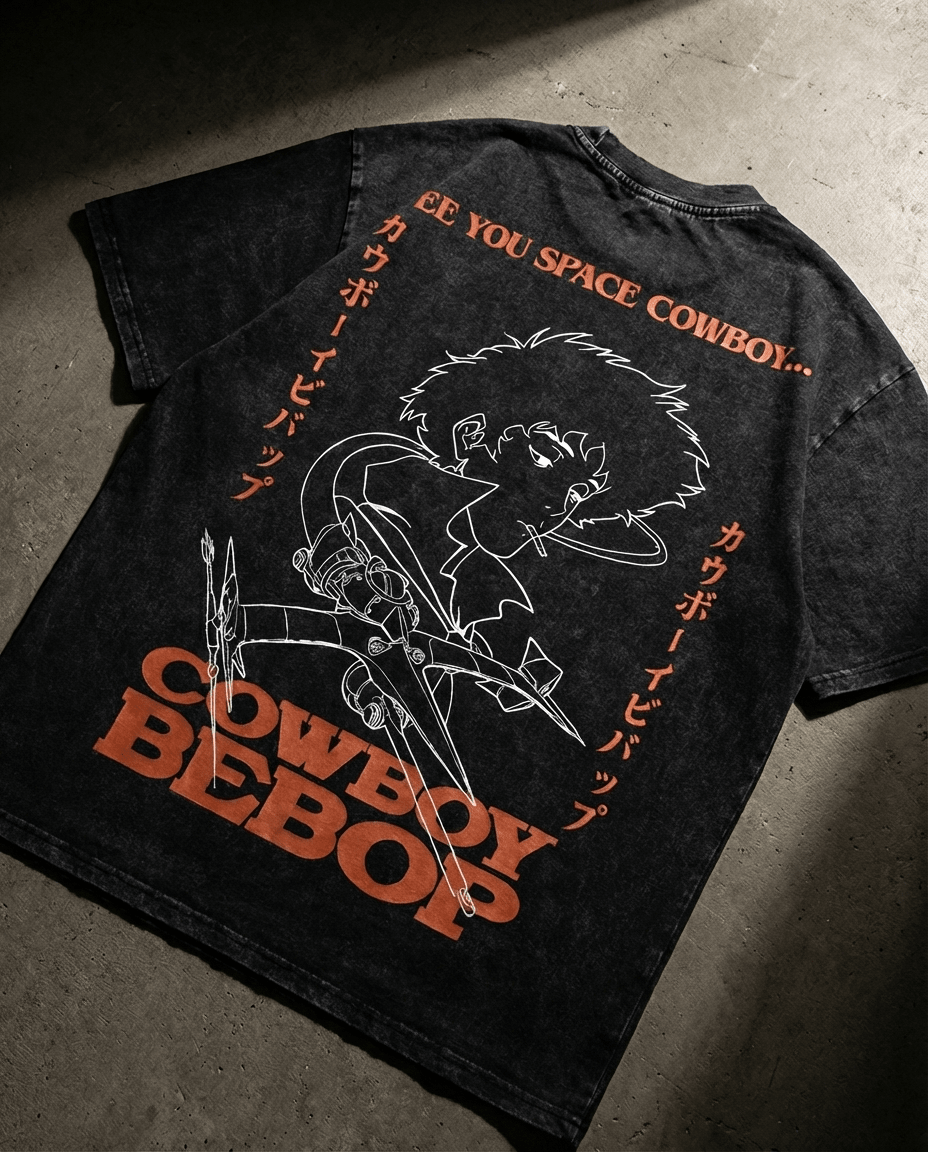

Leave a comment
This site is protected by hCaptcha and the hCaptcha Privacy Policy and Terms of Service apply.