
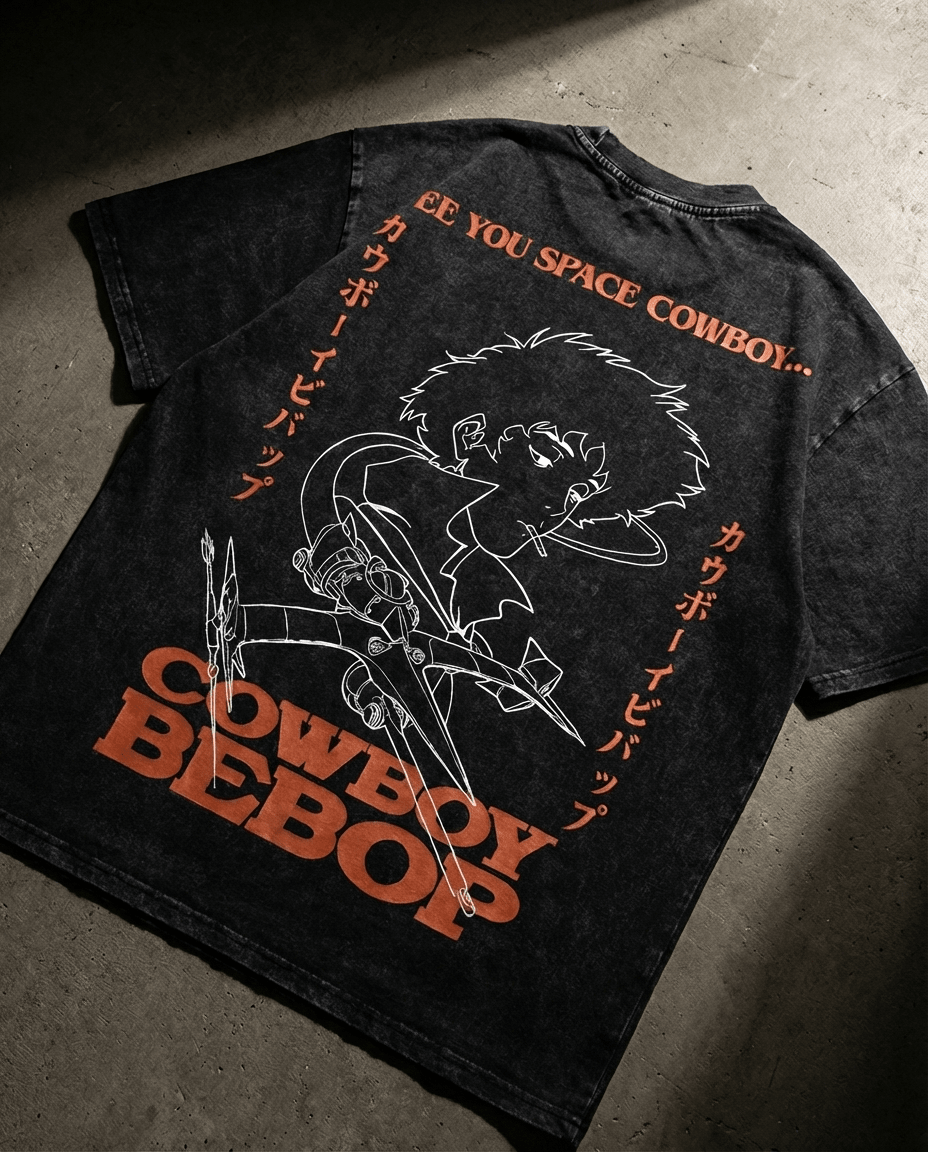
How to Buy a High-Quality Anime T-Shirt
How to Buy a High-Quality Anime T-Shirt: The Complete Quality Guide
The short answer: a high-quality anime t-shirt is decided by seven things you can check before paying: fabric weight (aim for 200+ GSM), cotton type (ring-spun, ideally combed), pre-shrinking or garment washing, print method (screen print or quality DTG over cheap transfers), collar and stitching construction, an honest size chart with real measurements, and a seller who publishes all of the above instead of hiding it. This guide teaches you to check each one in minutes, plus the marketing tricks designed to stop you from checking.
This is the construction-and-quality companion to our style guide on choosing an anime t-shirt. That one helps you pick the right design; this one makes sure the shirt under the design is worth your money. Nothing here requires expertise, only knowing where to look.
In this guide
What fabric should a quality anime shirt be made of?
100% cotton at 200 GSM or more, ring-spun, ideally combed, and pre-shrunk or garment-washed. Each of those words earns its place, so here is what they mean in plain language.
Fabric weight (GSM) is grams per square meter, the density of the cloth. Cheap merch runs 130 to 160 GSM: thin, semi-sheer in light colors, shapeless after a season. Quality tees start around 200 GSM; heavyweight streetwear runs 230 to 250. Weight buys durability, opacity, and drape. We wrote a full deep-dive on this in why heavyweight cotton anime shirts are better; the one-line version is that a heavyweight shirt contains roughly 60% more cotton than a promo tee, and it behaves like it.
Ring-spun vs regular (open-end) cotton is the yarn question. Open-end spinning is the cheap, fast method: it produces a rougher, weaker yarn with lots of exposed fiber ends, which is why budget shirts feel coarse and pill quickly. Ring-spun yarn is continuously twisted and thinned, giving a smoother, stronger thread. Combed ring-spun goes one step further: the fibers are brushed before spinning to remove short strands and debris, leaving only long fibers. The practical result is a shirt that feels smooth on day one and still feels smooth after fifty washes.
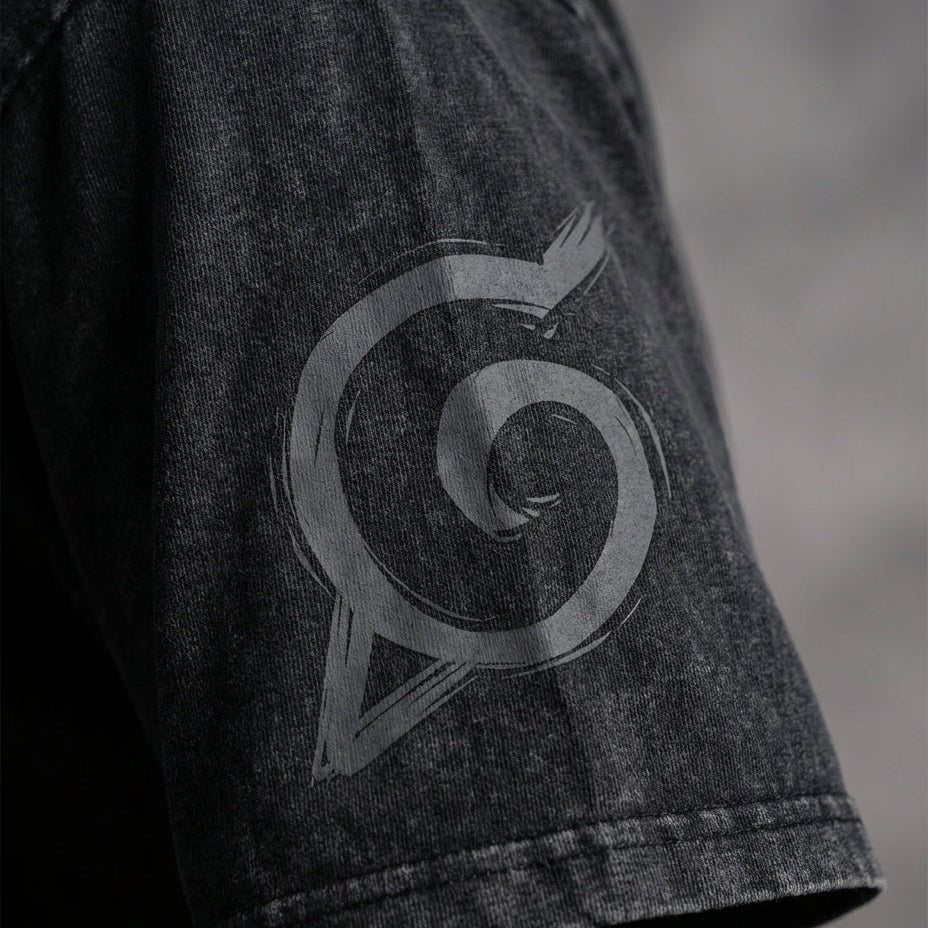
Garment washing (vintage wash, enzyme wash, acid wash) is a finishing step where the completed shirt is washed industrially before sale. It does two jobs at once: pre-shrinks the fabric so the size you buy is the size you keep, and softens the hand so heavyweight cotton arrives broken-in instead of stiff. It costs the manufacturer real money, which is exactly why cheap blanks skip it.
One honest nuance: cotton-polyester blends are not automatically bad. Blends resist wrinkling and dry faster, and some quality athletic-leaning shirts use them deliberately. But for the classic anime streetwear tee, where drape, breathability, and that broken-in feel are the goal, 100% cotton is the standard for a reason, and "100% cotton" on the label with no weight or yarn information is still not enough to judge by.
Which print method lasts longest on anime shirts?
Screen printing lasts longest for bold designs, high-quality DTG is best for detailed multi-color artwork, and cheap heat-transfer vinyl is the one that peels. The method matters as much as the fabric, and sellers rarely volunteer it, so here is how to judge:
| Method | How it works | Strengths | Weaknesses |
|---|---|---|---|
| Screen print | Ink pushed through stencils, layer by layer, then cured | Most durable, vivid colors, slight texture fans love | Limited color count, thick ink can feel heavy in huge prints |
| DTG (direct-to-garment) | Inkjet printing directly into the fabric | Unlimited detail and gradients, soft hand, ideal for manga panels | Quality varies enormously with machine, pretreatment, and curing; fades faster if done cheaply |
| DTF (direct-to-film) | Design printed on film, heat-pressed onto the shirt | Bright colors on any fabric, good detail | Sits on top of the fabric; lower-grade DTF feels plasticky and can crack at fold lines |
| Heat-transfer vinyl | Cut vinyl sheets pressed on | Cheap, fast | Peels and cracks fastest; the classic "cheap merch" failure |
| Sublimation | Dye vaporized into polyester fibers | Never cracks or peels, all-over prints possible | Polyester only, so it disqualifies itself for cotton streetwear |
Two field tests. On product photos, zoom into the print edge: crisp, slightly textured edges suggest screen print; a faint rectangular sheen around the design suggests a transfer. In hand, scrunch the printed area gently: quality prints flex with the fabric, cheap transfers feel like a plastic sticker and show white micro-cracks when stretched. And remember from our fabric guide: even a good print fails early on an unstable blank, because the fabric stretching underneath is what cracks ink. Print and fabric are a system.
How do you judge collar construction and stitching?
Check three points: a substantial ribbed collar, taped shoulder seams, and double-needle stitching at the hems. Construction is where quality hides in plain sight, because none of it shows in a product mockup.
The collar is the first thing to die on a cheap shirt. A quality collar is a thick rib knit, usually with some recovery built in, attached with a clean, even seam. Warning signs: a collar so thin it folds like paper, or one that already ripples on the product photo. The classic test on a shirt in hand: stretch the collar gently sideways and release. Quality ribbing snaps back; cheap ribbing stays slightly wavy, and that wave becomes permanent within months.
Shoulder taping is a strip of fabric sewn over the inside shoulder seam. It reinforces the highest-load seam on the shirt and stops it stretching out of shape when you pull the shirt on. Flip any shirt inside out: tape there is a quiet marker that someone cared about longevity.
Double-needle hems, the two parallel stitch lines at the sleeve and bottom hems, resist unraveling far better than a single line. Also glance at stitch density: tight, even stitches signal proper machinery and quality control; loose, wandering ones predict the seam's future.
Side-seamed vs tubular is the last construction split. Tubular bodies are knit as a tube with no side seams, cheaper to make and more prone to torquing, the spiral twist where seams migrate after washing. Side-seamed shirts are cut and sewn from flat fabric, follow the body better, and hold their geometry. Neither is disqualifying alone, but side-seamed plus garment-washed is the combination that keeps its shape for years.
How do you avoid shrinkage and fading?
Buy pre-shrunk or garment-washed, then keep heat away from the shirt for the rest of its life. Shrinkage and fading are half a manufacturing question and half a care question.
On the manufacturing side: untreated cotton knit can shrink 5 to 10% in hot water, mostly in length, which is a full size. "Pre-shrunk" means the fabric was compacted before cutting; garment washing goes further by shrinking the finished shirt itself. If a listing says neither, assume the worst and check whether the size chart says "measurements before washing", which is a quiet admission.
Fade resistance comes down to dye quality and dye method. Reactive-dyed cotton bonds color into the fiber and holds it; cheap pigment jobs sit on the surface and wash off visibly within ten cycles. You cannot verify dye chemistry from a listing, but you can use two proxies: garment-washed shirts have already survived an industrial wash, so what you see is close to what stays, and intentionally faded vintage-wash colorways make gradual fading a feature rather than a failure. Black is the most fade-visible color; a black shirt that still looks black after twenty cold washes is a shirt that was dyed properly.
How should you handle sizing when buying online?
Never buy from S/M/L letters alone: compare the listing's flat measurements against a shirt you already love. Letter sizes mean nothing across brands; a streetwear "M" and a fast-fashion "M" can differ by a full size in the chest.
The method takes two minutes: lay your best-fitting tee flat, measure armpit to armpit (chest width) and shoulder seam to hem (length), then match those numbers to the product's size chart. For an oversized anime streetwear fit, add 4 to 8 cm of chest width to your reference shirt; for a regular fit, match it. A seller who publishes full flat measurements in both cm and inches, states the fit (relaxed vs regular), and ideally tells you the model's height, weight, and worn size is giving you everything you need. A seller who offers only a generic S-M-L table with no garment measurements is hoping you will not ask. Our complete anime t-shirt fit guide covers oversized vs regular in detail, with full charts.
What marketing tricks should you watch for?
The common ones are vagueness dressed up as information: "premium quality" with no specs, mockups instead of photos, and prices manufactured to look discounted. Five patterns cover most of it:
1. Adjectives instead of numbers. "Premium", "high quality", "ultra soft" cost nothing to write. GSM, yarn type, and wash treatment are checkable facts. When a listing has many adjectives and zero specifications, the specifications would not have helped the sale.
2. Mockup-only listings. If every image is a digital render on a floating ghost shirt and there is not one photograph of a printed, physical garment on a human, there is a real chance no physical garment existed when the listing went up. Print-on-demand at its laziest.
3. The eternal fake discount. A shirt "reduced" from an inflated anchor price, forever. Anchor pricing is legal theater; judge the actual price against the actual specs instead.
4. "Unisex" hiding a thin blank. Unisex sizing is fine and normal, but the word is sometimes used to dodge stating any fabric details at all, because generic unisex blanks are the cheapest tier of print-on-demand catalogs.
5. Stolen art and stock designs. Reverse-image-search a design you love before buying. If the identical artwork appears across dozens of unrelated stores, you are looking at a scraped design printed by whoever, with quality to match, and the original artist sees nothing.
What are the red flags and green flags of a quality listing?
Scan any product page against this table before paying:
| 🚩 Red flags | ✅ Green flags |
|---|---|
| No GSM, yarn, or fabric details anywhere | Stated GSM, "ring-spun", "combed", or "garment-washed" in the description |
| Only digital mockups, no photos of the real shirt | Photos of the printed shirt on a model, with model stats and worn size |
| Letter sizes only, no garment measurements | Full flat measurements in cm and inches per size |
| No return policy, or returns at your cost with restocking fees | Clear return window stated up front |
| Identical designs found across dozens of stores | Original artwork consistent with one brand's style across its catalog |
| Vague shipping ("2-6 weeks"), no tracking mentioned | Stated dispatch time and tracked shipping |
| No care instructions (the seller does not expect the shirt to last) | Specific care guidance per product |
No single red flag is fatal on its own, and no single green flag guarantees quality. Three or more red flags together, though, describe a listing built for one purchase, not a repeat customer.
How much should a quality anime shirt cost?
Judge cost per wear, not price per shirt: a well-made tee at three times the price of a cheap one typically outlasts it by five times or more. The arithmetic most buyers never run:
| Cheap merch tee | Quality heavyweight tee | |
|---|---|---|
| Typical price | Low | 2–3× higher |
| Realistic lifespan of regular wear | 15–30 wears before visible decline | 100+ wears, often years |
| Cost per wear | Higher than it looks | Lower than it looks |
| How it ages | Fades, twists, print cracks, replaced | Softens, keeps shape, becomes the favorite |
Where the extra money physically goes: roughly 60% more cotton in a heavyweight blank, better yarn (ring-spinning and combing are extra process steps), garment washing (an entire additional industrial wash), stronger construction, better print curing, and, for original brands, paying an artist. The honest flip side: past a certain point, price stops buying fabric and starts buying logo. A four-fold price premium over a well-specified heavyweight tee is usually brand tax, not better cotton. The specs in this guide are precisely how you tell the difference.
The complete buying checklists
Online, before you pay (2 minutes):
1. Fabric specs stated? GSM 200+, ring-spun or combed, garment-washed or pre-shrunk.
2. Real photos of the printed shirt, ideally on a model with height, weight, and size worn.
3. Full size chart with flat garment measurements; compare against your best-fitting tee.
4. Design reverse-image-searched: original to this brand?
5. Return window, dispatch time, and tracked shipping stated?
6. Care instructions present?
In hand, when it arrives (1 minute):
1. Hold it to a light: opaque, not sheer.
2. Collar stretch test: pull gently sideways, it should snap back flat.
3. Inside out: taped shoulder seams, tight even stitching, double-needle hems.
4. Print scrunch test: flexes with the fabric, no plastic feel, no white cracking.
5. Measurements match the chart within a centimeter or two. If anything fails, the return window from check 5 above is why you verified it exists.
Decision tree: should you buy this shirt?
How do you care for a quality anime shirt?
Cold, inside out, hang dry. Those three habits roughly double any printed shirt's life. The full routine: turn the shirt inside out to protect the print, wash cold (30°C or below) on a gentle cycle, skip the tumble dryer entirely and hang or lay flat, never iron the print directly (inside out on low, or steam), and wash less often than you think you need to, since heavyweight cotton stays fresh longer between washes than clinging thin jersey. Heat is the enemy in every step; remove it and both fabric and print age gracefully.
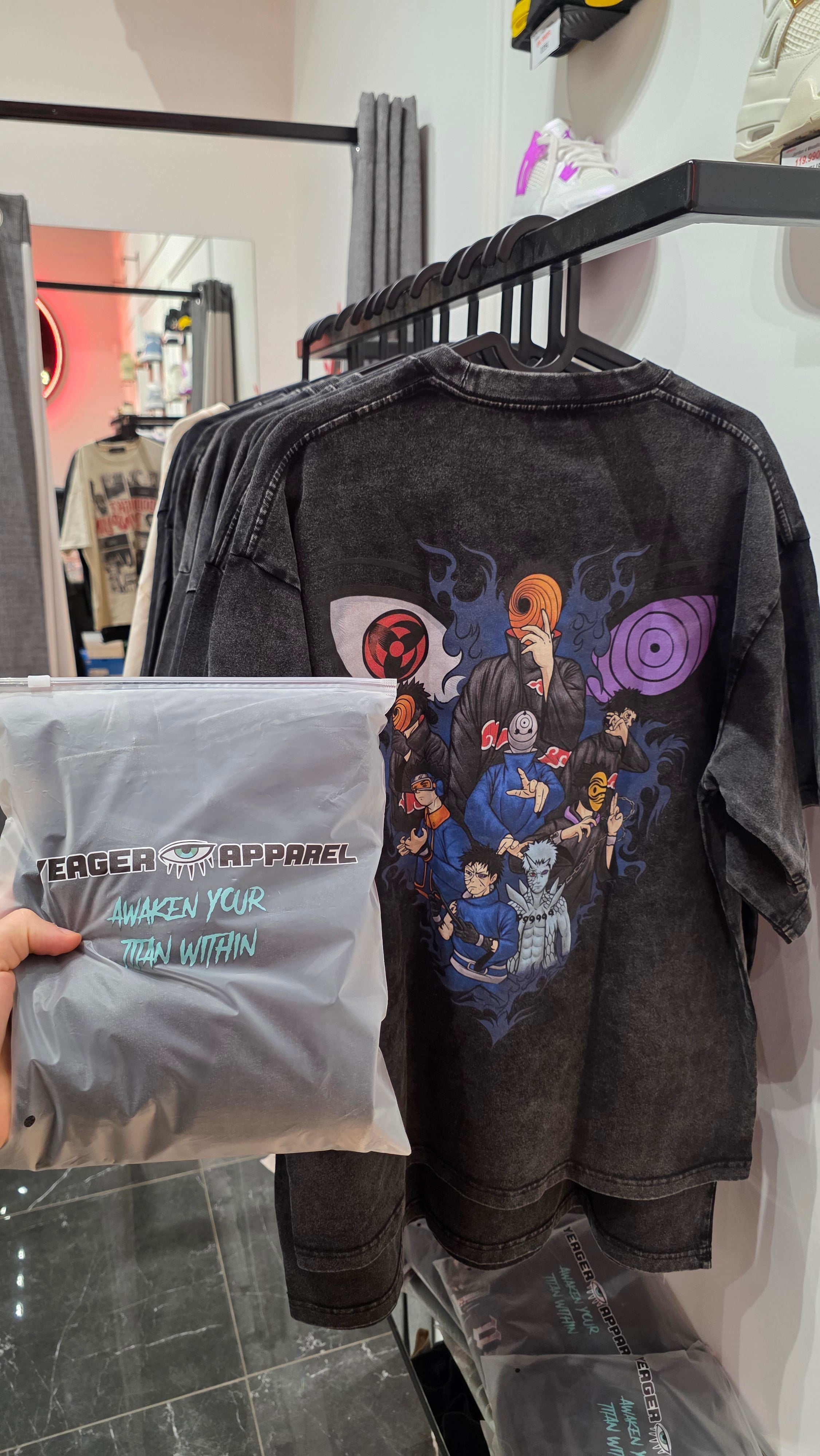
What makes premium anime clothing different, and where does Yeager Apparel fit?
Premium anime clothing is simply the checklist above, taken seriously on every line: real fabric, real construction, original art, and published specs a buyer can verify. Having spent four thousand words teaching you to audit sellers, it would be strange not to submit ourselves to the same audit, so here it is, point by point against this guide.
Our vintage tees are garment-washed heavyweight cotton, which covers the pre-shrinking, the broken-in softness, and the structure this guide keeps returning to. Our regular-fit line is a 210 GSM pure cotton, stated on the product pages rather than hidden, and our hoodies run up to a 420 GSM fleece. Size charts are published with flat measurements in cm and inches, the fit is stated (relaxed vintage, regular), our fit photos include the model's stats, and the fit guide holds the full charts. Every design is original, made in-house by fans, not scraped art. Orders dispatch in 1 to 2 business days with free tracked worldwide shipping, there is a 14-day return window for unworn items, and care guidance lives on the product pages. Run the red-flag table against any listing of ours; that is genuinely what the table is for, and it applies to us exactly as much as to anyone else.
Anime t-shirt quality FAQ
How can you tell if an anime shirt is good quality before buying?
Check for stated fabric specs (200+ GSM, ring-spun or combed cotton, garment-washed), real photos of the printed shirt on a model, a size chart with flat garment measurements, a clear return policy, and original artwork. Listings missing three or more of these are built for one-time sales.
What is the difference between ring-spun and regular cotton?
Regular (open-end) cotton yarn is spun quickly and cheaply, leaving a rough, weaker thread that pills. Ring-spun yarn is continuously twisted and thinned into a smoother, stronger thread; combed ring-spun additionally removes short fibers for the softest, most durable result.
Which print method is best for anime designs?
Screen printing for bold, limited-color designs (most durable), high-quality DTG for detailed artwork and manga panels (best detail, soft hand). Cheap heat-transfer vinyl is the method that peels and cracks first.
Why do cheap anime shirts fall apart so fast?
They combine thin 130–160 GSM open-end fabric that stretches and shrinks under the print, unreinforced seams, thin collars, and low-grade transfers. Each failure accelerates the others, which is why decline is visible within 15 to 30 wears.
Is an expensive anime shirt always better?
No. Price correlates with quality only when the specs back it up. Past a well-specified heavyweight tee, extra price usually buys branding, not fabric. Judge the specs, then the price.
Should anime shirts fit oversized?
Oversized is the dominant anime streetwear silhouette and works best in heavyweight fabric, which has the self-weight to drape cleanly. Regular fits suit layering and dressed-up wear. Both are valid; the fabric should match the cut.
Audit us with your new checklist.
Specs on every page, charts in the fit guide, current deals on the homepage.
Shop Best SellersThe companion guides: how to choose an anime t-shirt (style and design), why heavyweight cotton is better (fabric deep-dive), and the fit guide (sizing).

Leave a comment
This site is protected by hCaptcha and the hCaptcha Privacy Policy and Terms of Service apply.